There are very few places on earth where a single species commands the full attention of the world’s most seasoned saltwater anglers and GT fishing in the Andaman Islands is the pinnacle of that obsession. Nestled deep in the Bay of Bengal, the remote and pristine waters of the Andaman Sea offer some of the most electrifying Giant Trevally fishing on the planet. Raw, largely untouched, and brutally unforgiving, this is a destination that has earned its reputation among the global flyfishing and lure-casting elite. Whether you’re chasing your first GT or your hundredth, the Andamans deliver an experience that no other fishery in India or the world can replicate. This is your complete guide to planning, preparing for, and executing the GT fishing trip of a lifetime in India’s last great frontier.
In This Guide
What Is Giant Trevally (GT)?
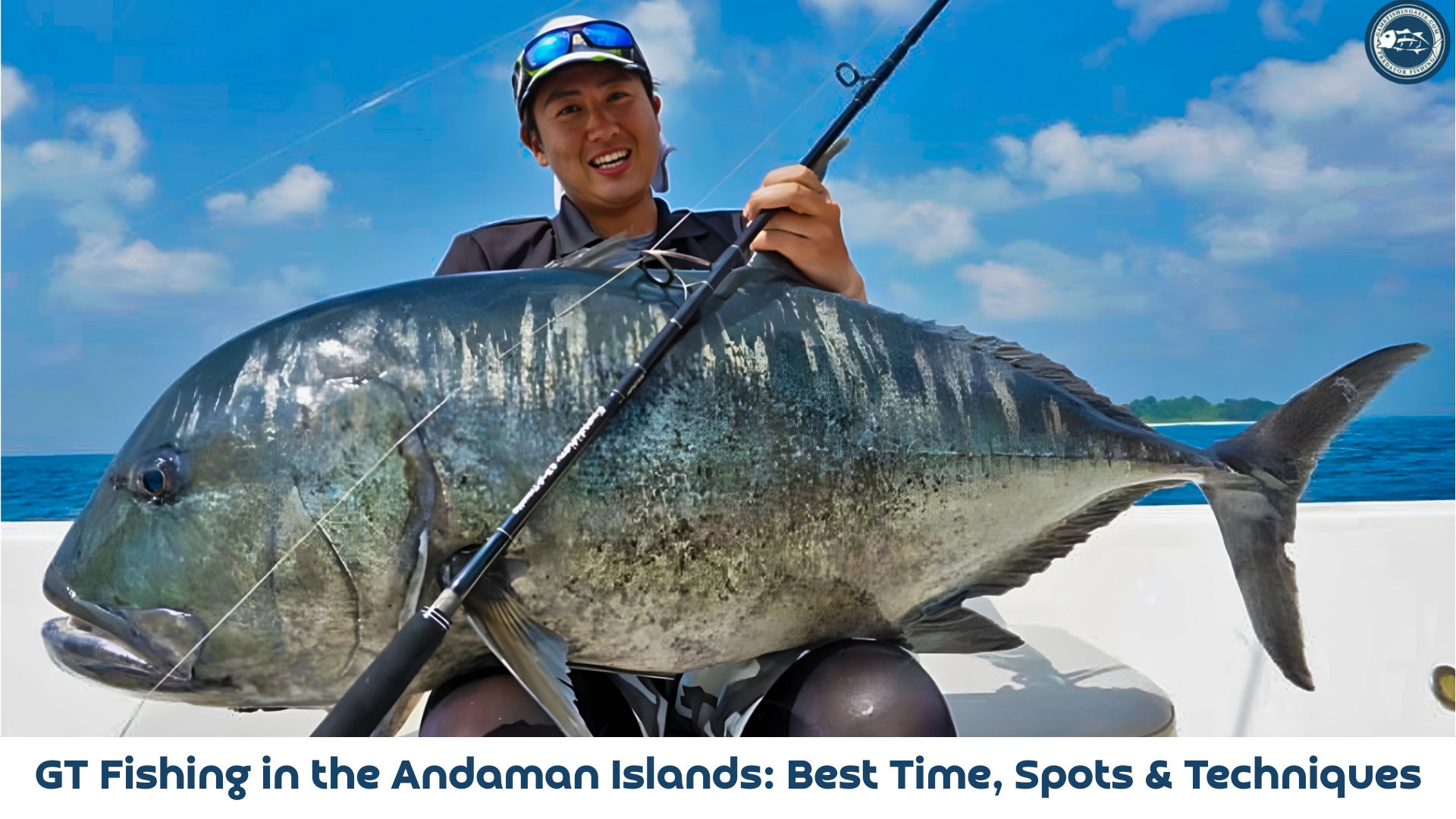
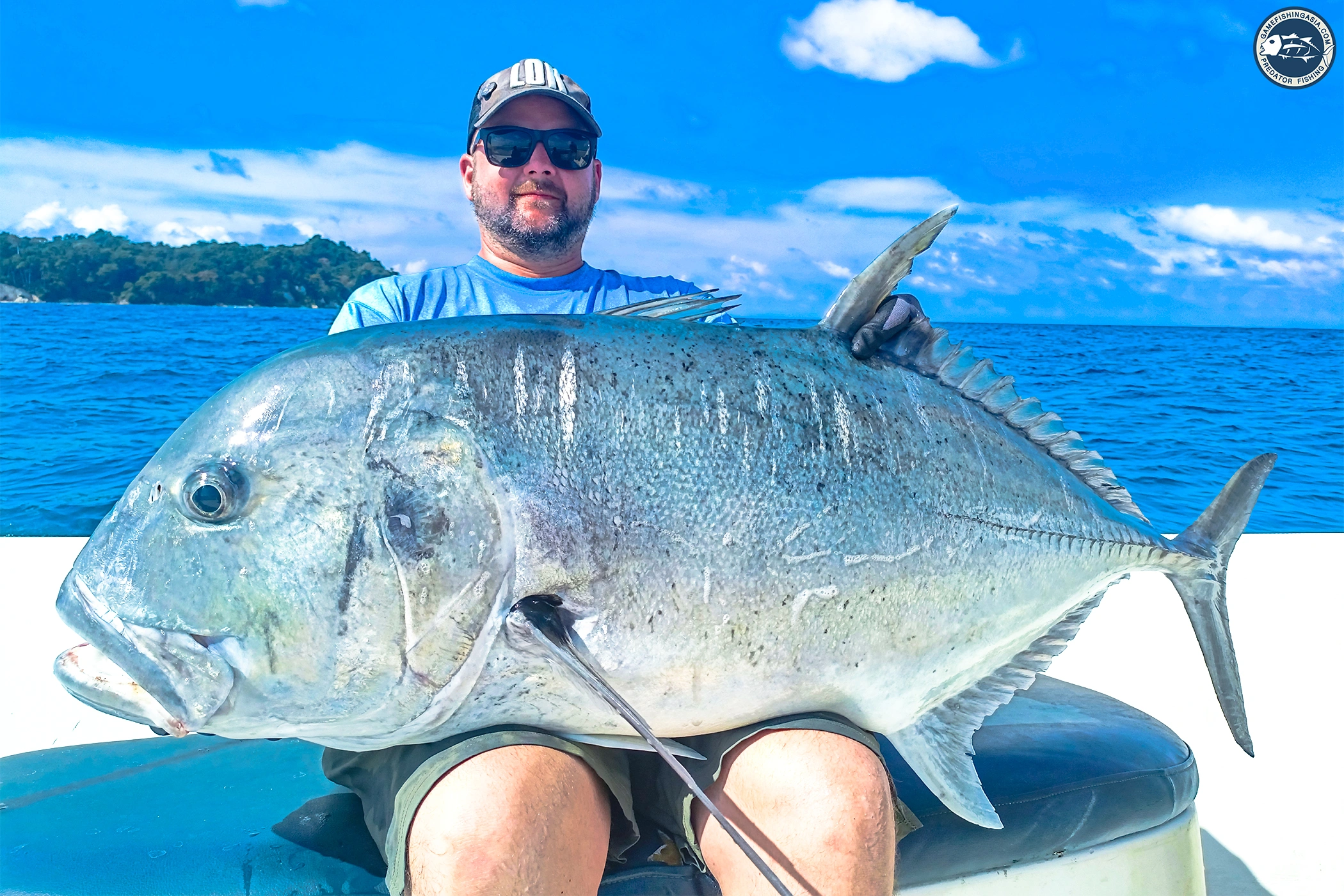
The Giant Trevally (Caranx ignobilis) is the apex predator of tropical inshore reef systems and one of the most sought-after game fish in the world. Known for explosive topwater strikes, raw power runs, and the sheer determination required to turn one away from structure, GTs have earned a near-mythical reputation among serious anglers.
They are the largest member of the jack family, regularly reaching 60-80 kg in the wild, with specimens over 40 kg considered true trophies. Their body plan, with a steep forehead, powerful forked tail, and deep flanks, is purpose-built for speed and brute force. Once hooked on a surface lure or jig, they accelerate hard toward the reef and simply do not stop. Tackle failure is the rule, not the exception, for the unprepared.
Species Profile
Giant Trevally (Caranx ignobilis) – Max size: 80 kg+ / 170 cm+. IUCN Status: Vulnerable. Found across the Indo-Pacific, with the Andaman Sea recognised as one of the most productive GT fisheries on the planet.
What makes GT fishing uniquely addictive is the visual nature of the hunt. On popping rods, you cast large surface plugs over reef flats and bommies and work them aggressively across the surface. Strikes are not subtle, they are violent, explosive eruptions of white water that leave experienced anglers shaking. It is a style of fishing that rewards aggression, fitness, and relentless persistence.
Why the Andaman Islands for GT Fishing?
The Andaman archipelago sits at a uniquely productive confluence of oceanographic conditions. The Andaman Sea is semi-enclosed, fed by deep Indian Ocean upwellings, and studded with over 500 islands, most of which are uninhabited. This translates into unpressured, pristine reef systems that hold genuinely wild, aggressive fish.
Unlike more heavily fished GT destinations in the Pacific or Southeast Asia, the Andamans remain one of the least-pressured GT fisheries in the world. There are no crowds of boats working the same bommies. The fish here have not been educated by years of lure presentations. They strike with the uninhibited ferocity of a truly wild predator — and that changes everything.
“The Andaman Sea offers something increasingly rare in sport fishing: genuinely wild, unpressured Giant Trevally in a frontier setting that tests every skill you have.”
Key advantages of Andaman GT fishing include remote volcanic reef systems accessible only by boat, extraordinary biodiversity that offers multi-species action alongside GT, the ability to fish new ground every single day, and a fishery that has been carefully managed by operators like Gamefishing Asia™ through rigorous catch-and-release practices since 2006.
For anglers from Europe, Australia, the USA, and India, the Andamans represent extraordinary value relative to competing destinations — exceptional fish, remarkable scenery, and one of the most hospitable fishing operations on the planet.
Best Time for GT Fishing in the Andaman Islands
The Andaman Islands have a well-defined fishing season driven by the southwest monsoon, which makes the sea unfishable from approximately May through September. The prime GT fishing window runs October through April, with distinct peaks within that season.
| Month | Rating | Season | Conditions |
|---|---|---|---|
| May – Sep | ⛈️ | Closed Season | SW monsoon. Unsafe seas. |
| Oct – Nov | ⭐⭐⭐⭐⭐ | Peak Season | Season opener. Hungry, aggressive fish. |
| Dec – Jan | ⭐⭐⭐⭐ | Excellent | Settled seas. Great visibility. |
| Feb – Apr | ⭐⭐⭐⭐⭐ | Peak Season | Trophy GTs. Big fish season. |
October – November: Season Opener
The first trips of the season typically run in early October, just after the southwest monsoon recedes. Fish that have had months of rest are aggressive, territorial, and hungry. Strike-to-catch ratios are often at their highest in this window, making it ideal for anglers targeting their first GT or wanting maximum action.
February – April: Trophy Season
As the season progresses into February and March, water temperatures and lunar cycles align to bring the largest GT specimens onto the shallower reef systems. Anglers hunting a true trophy fish – fish pushing 40–60 kg or more should prioritise the late-season window. The February – April period is also when current-swept points and channel edges produce their most spectacular GT encounters.
Tidal & Lunar Strategy
GT fishing is highly tide-dependent. The most productive windows are typically the 2-3 hours around moving tides, particularly on full and new moon periods when tidal exchange is strongest and GTs push up onto the shallows to ambush bait. Your guides will plan each day’s fishing around the tide tables.
Top GT Fishing Spots in the Andaman Islands
The Andaman archipelago spans over 700 km from north to south, and different zones offer different fishing characteristics. Gamefishing Asia™ operates across multiple zones out of Port Blair and remote lodge bases, accessing ground that very few other operators can reach.
01. North Andaman Reefs
02. Sister Islands
03. Cinque Island
04. Rutland & Passage Islands
05. South Andaman Drop-offs
06. Remote Outer Reefs
All fishing grounds are selected by Gamefishing Asia’s experienced skippers on the day based on weather, tidal conditions, and real-time intelligence from previous trips. You are never being taken to fixed tourist spots – you are fishing with guides who know exactly where the fish are right now.
GT Fishing Techniques: Popping, Jigging & Trolling
GT fishing in the Andamans is primarily a lure-fishing discipline. Three techniques dominate: topwater popping, vertical jigging, and trolling. Understanding each – and knowing when to deploy them is what separates anglers who land fish from those who lose them.
GT Popping (Topwater)
The pinnacle of GT fishing. Heavy spinning or overhead popping rods (PE 6–10) paired with large surface poppers and stickbaits cast over reef structures. The retrieve is aggressive and explosive — the aim is to mimic fleeing baitfish. Strikes are visual and violent. This is where legends are made.
Vertical Jigging
Highly effective when GTs are holding at depth or in fast current. Heavy assist-hook jigs (120–400g) are dropped to the bottom and worked upward with sharp, rhythmic strokes. Jigging is essential for reaching fish that won’t rise to the surface, and delivers excellent action on the Andaman’s deep reef systems.
Trolling
An effective search technique for covering ground and finding active fish. Large bibbed lures and skirted trolling heads are run at varying distances and depths. Trolling over reef edges and channel systems is an excellent way to locate active GT schools quickly before switching to popping or jigging for targeted presentations.
Walk-the-Dog Stickbaits
When GTs are following but refusing poppers, switching to a pencil or dart-style stickbait, with a rhythmic, side-to-side “walk the dog” action on a slack line, is often the trigger that converts followers into full-commitment strikes. A technique every Andaman GT angler should master.
The Golden Rules of GT Fishing in the Andaman Islands
1. Never stop retrieving on a following fish: A GT shadowing your lure is triggered by movement. The moment you hesitate, the fish loses interest. Commit to the lure all the way to the boat; many of the biggest strikes in GT fishing happen right at the gunwale.
2. Fight hard from the first second: GT’s first run takes them straight back into the reef. If you give them an inch, the fight is over. Lock the drag down and apply maximum pressure immediately — there is no gentle introductory phase in GT fishing.
3. Use barbless hooks: Gamefishing Asia™ insists on barbless hooks for all fishing. This makes release faster and safer for the fish, and perhaps counterintuitively, actually results in fewer lost fish when the technique is correct. A barbless hook requires consistent pressure throughout the fight, which makes for better anglers.
Gear & Equipment Guide for GT Fishing in the Andaman Islands
GT fishing demands heavy, purpose-built equipment. Attempting to land Andaman GTs on undersized tackle is not just ineffective — it results in prolonged fights that exhaust fish to the point where survival after release is compromised. Bring the right gear, or rent quality equipment through Gamefishing Asia™.
Popping Setup
- Popping rod rated PE 6–10, 7’6″-8’6″
- High-speed spinning reel (10,000–20,000 size)
- PE 6–8 braid mainline (200-300 m)
- 100–130 lb fluorocarbon leader, 6-8 m
- Large cup-face poppers 160-230 g
- Pencil stickbaits 140-200 g
- Split rings & solid rings rated 400 lb+
Jigging Setup
- Slow-pitch or speed jigging rod PE 4-8
- High-speed overhead or spinning reel
- PE 4–6 braid mainline (300-400 m)
- 80–100 lb fluorocarbon leader, 3-5 m
- Asymmetric jigs 180-400 g
- Assist hooks on Dyneema cord, single/double
- Solid rings & split rings rated 250 lb+
Clothing & Protection
- SPF 50+ long-sleeve fishing shirts
- Sun gloves and buff/neck gaiter
- Polarised sunglasses (essential for spotting GTs)
- Wide-brim fishing hat
- Lightweight neoprene wading shoes
- Rain jacket (Oct–Nov can have squalls)
Personal Essentials
- High-SPF reef-safe sunscreen
- Electrolyte drink mix or sachets
- Sea sickness medication (if prone)
- Personal medications (see Medical page)
- Waterproof camera or GoPro mount
- Fingerless fishing gloves for braid
Don’t Have GT-Rated Gear?
Gamefishing Asia™ maintains a comprehensive fleet of quality popping and jigging setups available to guests. If you are new to GT fishing or prefer to travel light, contact us in advance, and we will ensure you are matched with the appropriate gear for your experience level.
What to Expect on an Andaman GT Fishing Trip
A typical Gamefishing Asia™ trip runs 7–8 days and is structured to maximise your time on the water, your comfort on land, and your chances of landing fish. Here is what the experience looks like from arrival to departure.
Day 1: Arrival & Briefing
You will be collected from Port Blair Airport and transferred to GFA’s comfortable lodge. Your first evening includes a comprehensive trip briefing — tides, targeted species, technique overview, and tackle preparation. This is where you set up rods, check knots, and make sure everything is ready before you hit the water.
Fishing Days: On the Water
Boats depart early, typically before dawn, to reach the fishing grounds by first light – the most productive window of the day. A full day on the water includes multiple popping sessions timed around tidal movements, mid-day jigging or trolling if surface activity is slow, and an afternoon popping session as the tide turns. Lunch is served on the boat. Expect to cast hundreds of times per day – GT popping is physically demanding and deeply rewarding.
Evenings: Hospitality & Rest
GFA’s reputation for hospitality is well-earned. After a full day on the water, guests return to comfortable lodges for hot showers, freshly prepared meals using local ingredients, and an informal debrief that often turns into an evening of shared stories. Rest is important — every day on the water counts.
Catch & Release Protocol
All fish are released with care. GT and other game fish are never removed from the water unnecessarily. GFA’s skippers are trained in quick, safe handling – photos are fast, the fish is kept in the water as much as possible, and revival before release is standard. This approach ensures the fishery remains productive for future generations of anglers.
Fishing Rules & Regulations in the Andaman Islands
The Andaman & Nicobar Islands form a Union Territory of India, where central and territorial authorities govern fishing regulations. Licensed operators can host foreign nationals for sport fishing activities, but every visiting angler must understand some important rules.
Restricted Areas: Tribal reserve zones, certain national park waters, and areas around protected islands are strictly off-limits. Gamefishing Asia™ holds all required permits and operates exclusively within legal fishing zones. Guests never need to navigate permit requirements independently.
Catch & Release: Commercial retention and export of game fish species is prohibited. All fish caught on GFA trips are released alive. This is both a legal requirement in certain zones and an ethical commitment that defines GFA’s approach to the fishery.
Entry Permits: Foreign nationals require an Andaman Restricted Area Permit (RAP), which is issued on arrival at Port Blair Airport or can be arranged in advance through the Indian High Commission. GFA provides full guidance to international guests on visa and permit requirements as part of the trip planning process.
Frequently Asked Questions about GT Fishing in the Andaman Islands
1. Do I need prior GT fishing experience to join a trip?
No. Gamefishing Asia™ welcomes anglers of all experience levels. Our guides will provide full instruction on popping and jigging technique and will match you with appropriate tackle. Physically fit beginners with any saltwater fishing background do very well on GFA trips. That said, previous experience with heavy spinning gear makes the learning curve gentler.
2. How much does an Andaman GT fishing trip cost?
Solo angler trip prices vary by season and itinerary. GFA prices its solo angler trips for the latest season competitively, including accommodation, all meals, boats, guides, and equipment hire where needed. Private charter pricing depends on group size and duration. Contact GFA directly for a current quote that suits your requirements.
3. What is the largest GT caught in the Andamans?
The Andaman Sea regularly produces GTs over 40 kg, with exceptional specimens exceeding 60 kg. Because the fishery is largely unpressured and anglers practise catch-and-release as standard, they encounter significantly larger fish here than in most other GT destinations globally.
4. Can I bring my own tackle?
Absolutely, most experienced GT anglers prefer to fish their own gear. Ensure rods, reels, and terminal tackle are rated appropriately (see our Gear Guide above and the full Gear & What to Bring page on the GFA website). If you are flying in, consolidate your lures in checked luggage and keep rods in airline-approved rod tubes.
5. Is GT Fishing in the Andaman Islands suitable for solo travellers?
GFA’s solo angler programme is designed for individual anglers who want to share a boat with like-minded fishers from around the world. Many GFA guests travel solo and leave with lasting friendships formed over shared catches and challenging fish. The lodge environment is naturally social and welcoming.
Ready to Chase Your Trophy GT?
Gamefishing Asia™ has been running world-class GT fishing charters in the Andaman Islands since 2006. Limited spots available for the latest season trips are filling fast.